
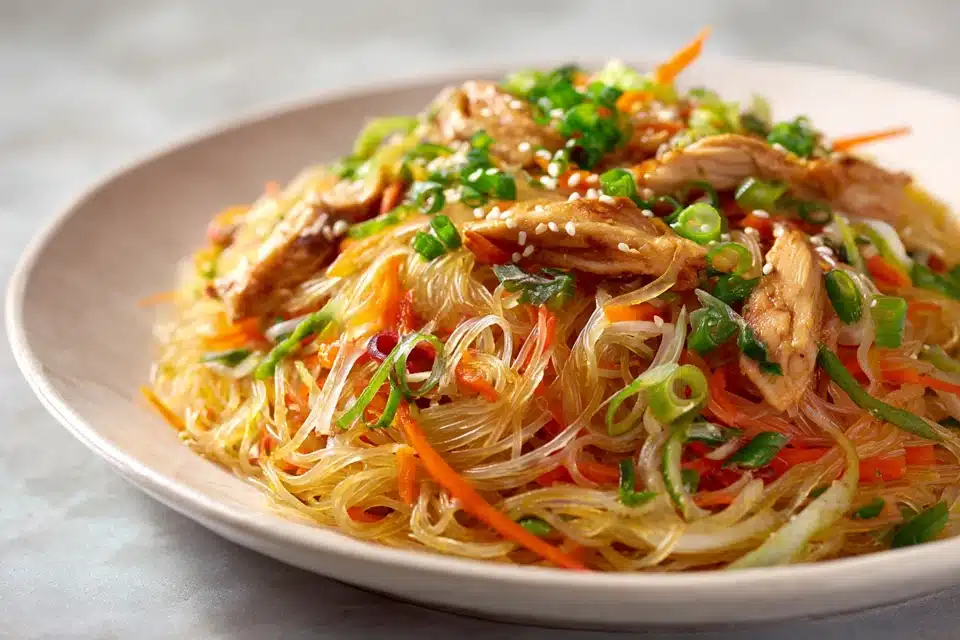
Quick Rice Noodle Stir-Fry: Protein Packed, Surprisingly Simple Dinner
This quick rice noodle stir-fry is the kind of recipe that saves dinner on the busiest weeknights. It’s fast, flexible, and packed with bold flavor and plenty of protein to keep you full and satisfied. Whether you’re meal-prepping for the week or just need a last-minute dish that doesn’t compromise on taste, this stir-fry checks all the boxes.
There’s something undeniably comforting about silky rice noodles tangled with crispy vegetables, bite-sized protein, and a savory sauce that clings to every strand. The dish comes together in under 30 minutes and can be tailored to suit whatever ingredients you have in your fridge. Chicken, tofu, beef, or shrimp all work beautifully, and the textures play off the tender noodles in a way that feels hearty and complete.
Even better, this recipe reheats like a dream, making it a smart choice for make-ahead lunches or quick heat-and-eat dinners. The key is using rice noodles that stay soft but don’t go mushy, and a stir-fry sauce with enough umami to tie everything together without overpowering the natural flavors of the fresh vegetables and protein.
Ingredients Overview
This dish is built on a foundation of pantry staples and fresh ingredients that create contrast in both flavor and texture. Here’s a closer look at what goes into this quick rice noodle stir-fry and why each component matters.
Rice noodles: These gluten-free noodles are light yet filling, making them the perfect base. Choose medium-width flat rice noodles for the best texture. If unavailable, vermicelli rice noodles or even soba can work as substitutes, though they’ll slightly alter the dish’s bite and consistency.
Protein of choice: Chicken breast, thinly sliced beef, tofu, tempeh, or shrimp all hold up well in a hot pan. Firm tofu gives a satisfying bite when seared until golden, while shrimp brings a natural sweetness. Leftover rotisserie chicken also works in a pinch.
Vegetables: Bell peppers, carrots, snow peas, and broccoli are go-to options. Their crunch balances the softness of the noodles. Feel free to use frozen stir-fry vegetable blends if you’re short on time.
Garlic and ginger: These aromatics add depth and warmth. Fresh is best, but jarred minced garlic and ginger paste can be used for convenience.
Soy sauce: This adds the salty, umami-rich backbone of the sauce. For a gluten-free version, tamari is a perfect replacement.
Oyster sauce: Thick, sweet, and savory, it brings complexity to the dish. Vegan oyster sauce is available for plant-based options.
Sesame oil: A few drops of toasted sesame oil add rich nuttiness at the end. It’s strong, so use it sparingly.
Lime juice or rice vinegar: Acidity balances the sauce and brightens the final dish. Lime adds a tropical edge, while rice vinegar keeps it more neutral.
Chili flakes or sriracha: For those who like heat, a small amount of chili gives the stir-fry a fiery kick without overwhelming the flavors.
Step-by-Step Instructions
- Soak the rice noodles: Place the noodles in a large bowl and cover them with hot tap water. Let them soak for 10–15 minutes until pliable but not mushy. Drain and set aside.
- Prep your ingredients: Slice all vegetables into uniform strips so they cook evenly. Cube or slice your protein thinly to ensure a fast sear. Have your garlic, ginger, and sauce ingredients ready.
- Make the stir-fry sauce: In a small bowl, whisk together 3 tablespoons soy sauce, 1 tablespoon oyster sauce, 1 teaspoon lime juice or rice vinegar, and a pinch of chili flakes or sriracha. Set aside.
- Cook the protein: Heat a tablespoon of neutral oil in a large skillet or wok over medium-high heat. Add the protein and cook until golden brown and cooked through. Remove from the pan and set aside.
- Sauté aromatics: In the same pan, add a splash more oil if needed. Add the minced garlic and grated ginger. Stir for about 30 seconds until fragrant but not browned.
- Add vegetables: Toss in the vegetables, starting with the ones that take longer to cook, like carrots or broccoli. Stir-fry for 3–5 minutes until just tender but still crisp.
- Combine noodles and sauce: Add the drained noodles and cooked protein back into the pan. Pour in the sauce and toss everything together. Use tongs or two wooden spoons to gently mix, ensuring the sauce coats every ingredient.
- Finish and serve: Drizzle with a small amount of toasted sesame oil and adjust seasoning with a dash more soy sauce or a squeeze of lime. Garnish with chopped scallions or sesame seeds if desired.
Common mistakes to avoid:
- Over-soaking noodles can make them fall apart in the pan.
- Crowding the pan reduces the sear and steams the ingredients instead.
- Adding sauce too early can make everything soggy.
Tips, Variations & Substitutions
Meal prep tip: Keep components separate until ready to eat. Store cooked noodles, protein, and vegetables in individual containers, then reheat and combine with fresh sauce.
Low-sodium version: Use low-sodium soy sauce and skip the oyster sauce. Add a splash of citrus and a touch of honey or maple syrup for balance.
Plant-based protein ideas: Tofu, tempeh, edamame, or seitan work beautifully. For added texture, try air-fried tofu or crispy chickpeas.
Flavor boosters: Add a spoonful of peanut butter to the sauce for a Thai-style twist. Or stir in fresh herbs like Thai basil or cilantro at the end for brightness.
Gluten-free option: Choose certified gluten-free rice noodles and use tamari instead of soy sauce. Double-check your oyster sauce, or use a mushroom-based alternative.
Vegetable swaps: Zucchini, green beans, baby corn, or bok choy all fit well. Frozen mixed stir-fry veggies can save prep time on busy nights.
Make it spicy: Add sliced fresh chilies, chili garlic sauce, or extra sriracha during cooking.
Serving Ideas & Occasions
This quick rice noodle stir-fry is perfect for easy weeknight dinners, weekend meal preps, or even casual dinner parties where you want something flavorful without the fuss.
Serve it with a chilled cucumber salad or pickled vegetables for contrast. A bowl of miso soup or a simple broth also pairs well, balancing the richness of the stir-fry.
For drinks, think light and refreshing—iced green tea, sparkling water with citrus, or even a cold lager if you’re feeling indulgent.
The dish travels well in lunchboxes and reheats quickly, making it ideal for work meals or post-gym refueling. It’s a flexible go-to when you want something fast, satisfying, and balanced.
Nutritional & Health Notes
This dish is naturally gluten-free when using rice noodles and tamari, and it can easily be adapted to suit vegetarian, vegan, or low-carb diets with a few ingredient swaps.
It’s high in protein thanks to the customizable protein source, and the mix of vegetables brings fiber, antioxidants, and vitamins to the table. Using minimal oil and choosing lean proteins like chicken breast or tofu keeps the calorie count in check.
The use of garlic and ginger not only adds flavor but may support digestion and add anti-inflammatory properties—though this dish is designed for taste and texture, not health claims.
Keeping the sauce lighter and loading up on vegetables makes this stir-fry a solid everyday option that won’t weigh you down but still satisfies deeply.
FAQs
1. Can I make this rice noodle stir-fry ahead of time?
Yes. Prepare the noodles, vegetables, protein, and sauce separately. Store them in airtight containers in the fridge for up to 4 days. Combine and reheat when ready to eat to maintain freshness.
2. Why are my rice noodles mushy or sticking together?
This usually happens if they are over-soaked or overcooked. Soak just until pliable and rinse under cold water to prevent sticking. Avoid boiling unless your package specifically calls for it.
3. What protein works best in this recipe?
Chicken breast, shrimp, beef strips, tofu, or even eggs are great choices. Choose based on your dietary preferences. Tofu is ideal for a vegetarian version and holds up well in the stir-fry.
4. Can I make this without soy sauce?
Yes. Try coconut aminos or tamari for a soy-free or gluten-free version. Add a pinch of salt to balance the flavor if needed.
5. How do I keep vegetables crisp in a stir-fry?
Cut them evenly and don’t overcrowd the pan. Cook over high heat for a short time to preserve their texture and color.
6. Can I use frozen vegetables?
Absolutely. Frozen stir-fry vegetable blends are convenient and work well. Just sauté them directly from frozen and cook off the excess moisture.
7. What’s the best way to reheat leftovers?
Use a hot pan with a splash of water or oil to reheat the stir-fry. This revives the noodles and keeps everything moist without becoming soggy.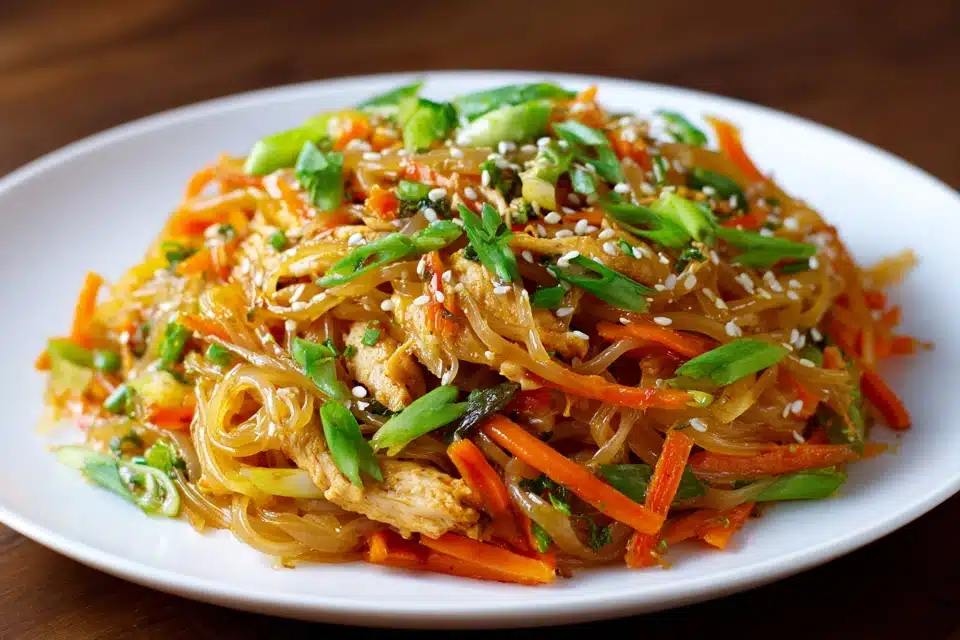
Easy Rice Noodle Dinner Recipe That’s Light but Filling
A quick, protein-packed rice noodle stir-fry loaded with fresh vegetables, customizable proteins, and a savory sauce. Perfect for weeknight dinners or meal prep.
- Prep Time: 15 minutes
- Cook Time: 15 minutes
- Total Time: 30 minutes
- Yield: 4 servings 1x
Ingredients
8 oz flat rice noodles
1 tbsp neutral oil
2 garlic cloves, minced
1 tsp fresh ginger, grated
1 cup sliced bell peppers
1 cup broccoli florets
1/2 cup shredded carrots
1 cup cooked chicken, tofu, shrimp, or beef
3 tbsp soy sauce
1 tbsp oyster sauce
1 tsp lime juice or rice vinegar
1/2 tsp chili flakes or sriracha
1 tsp toasted sesame oil
Optional: scallions, sesame seeds for garnish
Instructions
- Soak rice noodles in hot water for 10–15 minutes. Drain and set aside.
- Prepare all vegetables and protein.
- Mix soy sauce, oyster sauce, lime juice, and chili flakes in a small bowl.
- Heat oil in a large pan or wok over medium-high heat. Cook protein until golden. Remove and set aside.
- In the same pan, sauté garlic and ginger for 30 seconds.
- Add vegetables and stir-fry for 3–5 minutes.
- Return protein and noodles to the pan. Add sauce and toss well.
- Drizzle with sesame oil. Serve hot, garnished with scallions or sesame seeds.
Notes
Substitute tamari for gluten-free version. Use any protein you prefer. Frozen veggies work well too.