
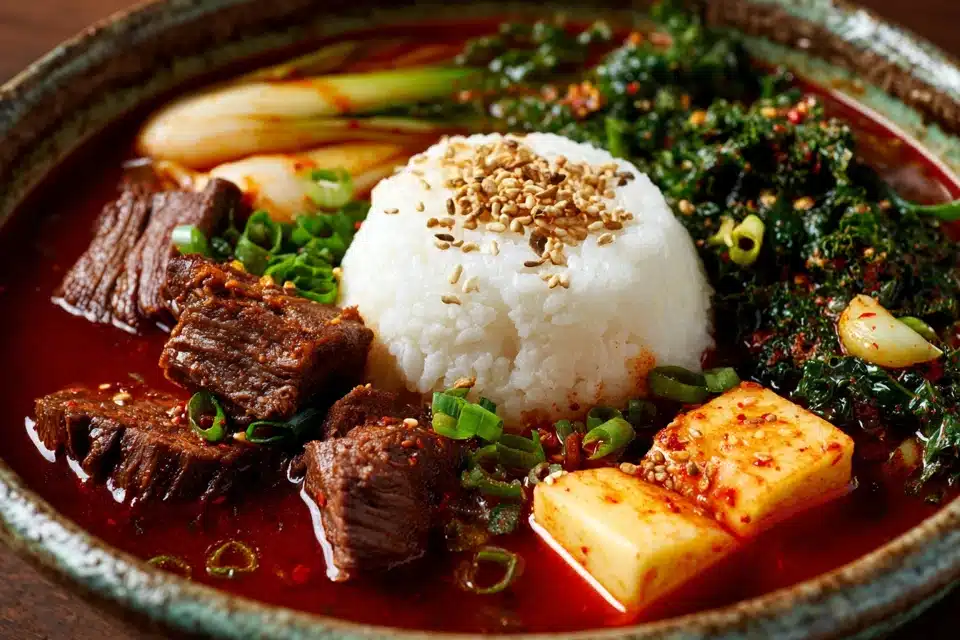
Korean Winter Soup – 1 Nourishing Bowl, 1 Classic Comfort, Endless Warmth
As the temperature drops and winter settles in, there’s nothing quite like a hot bowl of Korean Winter Soup to bring warmth and deep comfort. These soups, known for their balance of rich broths, umami flavor, and wholesome ingredients, are cornerstones of Korean cold-weather cooking.
This version draws inspiration from traditional guk (soup) and jjigae (stew) recipes, blending hearty vegetables, tender beef or tofu, and the unmistakable aroma of garlic, sesame oil, and fermented ingredients like doenjang or gochujang. The result is a soul-soothing bowl that fills the kitchen with warmth and the body with deep satisfaction.
Perfect as a full meal or a side dish in a Korean-style spread, this soup is endlessly customizable and packed with nutrients. It simmers gently, creating a broth that’s rich without being heavy—just what winter calls for.
Ingredients Overview
Beef or Tofu:
Thinly sliced beef brisket or stew meat adds depth and richness. Tofu is a common alternative, especially in vegetarian or lighter versions. Both work beautifully. If using tofu, firm or medium-firm is best to hold its shape.
Doenjang (Fermented Soybean Paste):
A staple in Korean cuisine, this paste brings savory depth and umami. It’s the base for many winter soups like doenjang-guk or doenjang-jjigae. It’s similar in richness to miso but earthier.
Gochujang (Korean Chili Paste):
Optional, but adds a touch of heat and sweetness. Perfect if you want your soup spicy and bold.
Garlic:
Fresh garlic is essential and used generously. It infuses the broth and deepens the flavor.
Sesame Oil:
A drizzle of toasted sesame oil enhances aroma and finishes the dish with a nutty warmth.
Soy Sauce:
Used for seasoning and extra umami. Low-sodium is best for control, but traditional Korean guk ganjang (soup soy sauce) is ideal if available.
Vegetables:
- Napa Cabbage – Wilts beautifully and absorbs broth flavor
- Zucchini – Adds sweetness and color
- Onion – Base flavor
- Scallions – Added toward the end for freshness
- Potatoes or Radish – Adds heartiness; Korean radish (mu) is traditional
Mushrooms:
Shiitake or enoki mushrooms add texture and a savory boost. Dried shiitakes deepen the broth when soaked beforehand.
Anchovy Broth or Beef Broth:
Anchovy-kelp broth is traditional and gives authentic Korean flavor. You can use beef broth or water with a dash of dashi powder as alternatives.
Tofu (Optional):
If you’re already using beef, tofu can still be added for texture. It also makes the soup more filling and protein-rich.
Step-by-Step Instructions
1. Make the Broth:
In a pot, combine 6 cups water with a piece of dried kelp and 5 dried anchovies (gutted). Bring to a gentle simmer, cook for 10 minutes, then remove solids. This is your base. If using beef broth, skip this step and warm the broth separately.
2. Sauté the Aromatics:
In a large soup pot, heat 1 tablespoon sesame oil over medium heat. Add 1 chopped onion, 3 minced garlic cloves, and ½ pound thinly sliced beef (or cubed tofu). Cook until beef is browned or tofu is slightly golden.
3. Add Doenjang and Gochujang:
Stir in 1½ tablespoons doenjang and 1 teaspoon gochujang (optional). Let them melt into the mixture, stirring constantly for 1–2 minutes to toast the paste and bring out flavor.
4. Add Broth and Veggies:
Pour in the anchovy broth (or 6 cups warm broth/water). Stir well. Add sliced napa cabbage, diced Korean radish or potato, zucchini, and mushrooms. Bring to a boil, then reduce heat to a simmer.
5. Simmer Gently:
Let the soup simmer uncovered for 20–25 minutes, until the vegetables are tender and flavors are well blended. Skim any foam that rises to the top.
6. Season to Taste:
Add 1–2 teaspoons soy sauce and a pinch of salt if needed. Stir in chopped scallions during the last 2 minutes of cooking.
7. Serve Hot:
Ladle into bowls and finish with a few drops of sesame oil. Serve with a side of steamed rice or kimchi.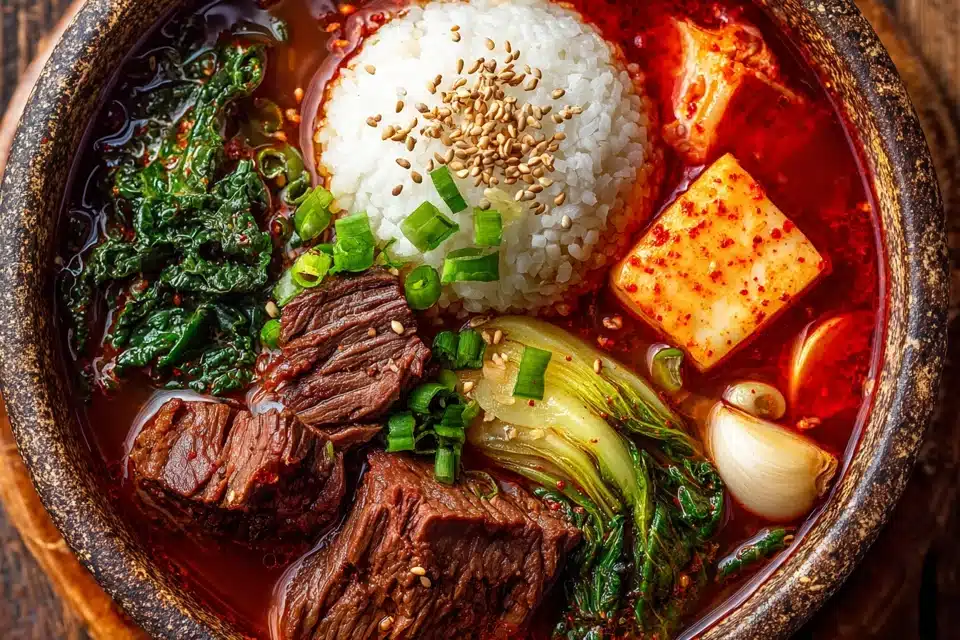
Tips, Variations & Substitutions
- Milder Version: Skip gochujang and reduce garlic slightly. Add more vegetables like spinach or mung bean sprouts.
- Add Noodles: Sweet potato noodles (dangmyeon) or thin wheat noodles can be added for a heartier bowl.
- Vegetarian Swap: Use tofu and mushrooms for body. Build broth with kombu and dried shiitakes for richness.
- No Doenjang? Use miso as a substitute, but reduce salt as miso can be saltier.
- Quick Option: Use prepared Korean soup base or dashi granules in place of homemade broth for speed.
- Extra Protein: Crack an egg into the simmering soup during the last few minutes and poach gently.
Serving Ideas & Occasions
This Korean Winter Soup is perfect for cold evenings, simple family dinners, or as a starter in a larger Korean meal. It pairs well with hot steamed rice, kimchi, and simple banchan (side dishes) like sautéed spinach or pickled radish.
For casual meals, serve in large bowls with spoons and chopsticks, allowing each bite to include a little bit of everything—broth, protein, vegetables, and rice.
This soup is ideal for meal prep and even better the next day, as the flavors deepen and meld.
Nutritional & Health Notes
Korean soups are known for being balanced and nourishing. This one provides high-quality protein from beef or tofu, a wide variety of vegetables, and a fermented base that supports digestion.
It’s naturally low in fat, customizable for sodium levels, and can easily be made vegetarian or gluten-free. The combination of garlic, fermented paste, and slow simmering helps support immune function and digestion—great for winter wellness.
Adding rice or noodles transforms it into a full meal, or you can serve it light as a warming starter.
FAQs
1. Can I make this soup vegetarian?
Yes. Use kombu and dried shiitakes to make a rich plant-based broth. Swap beef with tofu or tempeh.
2. What is doenjang and where can I find it?
Doenjang is a fermented soybean paste. It’s sold in tubs at Asian grocery stores and keeps well in the fridge. Miso is a suitable substitute in a pinch.
3. Can I freeze Korean Winter Soup?
Yes, but leave out tofu and potatoes—they can change texture when frozen. Freeze broth and veggies, then add fresh tofu when reheating.
4. What rice goes best with this soup?
Short-grain Korean white rice (bap) is traditional. Brown rice also works well for added fiber.
5. How spicy is this recipe?
The base version is mild to moderate. Gochujang adds heat, so you can reduce or skip it for a milder soup. Add more for a spicy kick.
6. Can I use chicken instead of beef?
Yes. Thinly sliced chicken breast or thighs work well and cook quickly. Just don’t overcook, or it can dry out.
7. How do I store and reheat leftovers?
Refrigerate in airtight containers for up to 4 days. Reheat gently over medium heat, adding water if the soup has thickened.
Comforting Korean Soup Dish for Cold Nights
A cozy, savory Korean winter soup made with beef or tofu, fermented soybean paste, and seasonal vegetables—perfect for cold days.
- Prep Time: 10 minutes
- Cook Time: 30 minutes
- Total Time: 40 minutes
- Yield: 4 servings 1x
Ingredients
- ½ lb thinly sliced beef or firm tofu
- 1 onion, chopped
- 3 garlic cloves, minced
- 1 tbsp sesame oil
- 1½ tbsp doenjang
- 1 tsp gochujang (optional)
- 6 cups anchovy-kelp or beef broth
- 1 cup napa cabbage, chopped
- 1 cup Korean radish or potato, diced
- ½ zucchini, sliced
- ½ cup mushrooms (shiitake or enoki)
- 1–2 tsp soy sauce
- 2 scallions, chopped
- Salt to taste
Instructions
- Make anchovy-kelp broth or heat beef broth.
- Sauté onion, garlic, and beef/tofu in sesame oil.
- Stir in doenjang and gochujang. Toast 1–2 minutes.
- Add broth, cabbage, radish, zucchini, and mushrooms. Bring to boil.
- Simmer 20–25 minutes. Skim foam.
- Stir in soy sauce, scallions, and season to taste.
- Serve hot with rice and sesame oil drizzle.
Notes
Use miso if doenjang isn’t available. Add egg or noodles for variety. Store up to 4 days in the fridge.