
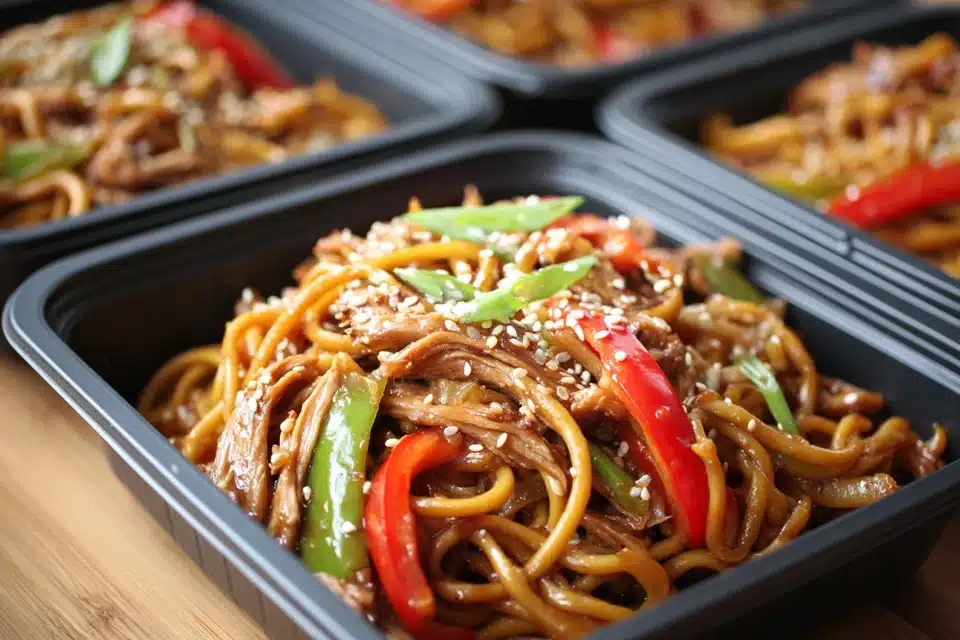
High Protein Chicken Chow Mein Noodles – Easy Macro-Friendly Meal Prep
Introduction
Chicken chow mein has long been a favorite in Chinese-American cuisine — a comforting, satisfying noodle dish that brings together tender protein, crisp vegetables, and chewy noodles in a savory sauce. This high-protein chicken chow mein version is a macro-friendly twist, perfect for meal prep and clean eating goals.
With lean chicken breast as the protein base, whole wheat or high-fiber noodles, and a colorful array of stir-fried vegetables, this version is lower in fat and calories without losing any of the bold umami flavor. The noodles soak up a light soy-garlic sauce with hints of sesame and ginger, delivering a deeply savory bite every time.
Whether you’re tracking your macros or simply craving a healthier takeout-style meal, this chicken chow mein is balanced, satisfying, and easy to portion for the week ahead.
Ingredients Overview
The ingredients in this macro-friendly chow mein are chosen to balance protein, complex carbs, and fiber, while keeping calories in check and flavors authentic.
Chicken Breast
Boneless, skinless chicken breast is the leanest protein option here. It cooks quickly, shreds or slices beautifully, and absorbs flavor well. For juicier texture, marinate it briefly in low-sodium soy sauce and cornstarch before stir-frying.
Alternatives: Boneless chicken thighs (higher fat), tofu or seitan (vegan option), or lean ground turkey.
Chow Mein or High-Protein Noodles
Traditional chow mein uses wheat noodles, but for macro balance, opt for:
- Whole wheat lo mein noodles
- High-protein spaghetti or edamame noodles
- Ramen-style noodles made with pea or soy protein
The key is a slightly chewy, firm noodle that can hold sauce without going soggy during storage.
Vegetables
This version includes:
- Shredded carrots: natural sweetness and color
- Cabbage: crunch and bulk
- Bell peppers: vibrant and juicy
- Green onions: aromatic finish
- Bean sprouts (optional): adds texture
Meal Prep Tip: Slice vegetables evenly so they cook at the same rate. Use fresh over frozen for better stir-fry texture.
Aromatics and Sauce
The sauce is a blend of low-sodium soy sauce, sesame oil, rice vinegar, garlic, ginger, and a touch of oyster sauce (or hoisin for vegetarian). A small amount of cornstarch thickens the sauce without added fat.
For extra spice, add chili garlic paste or crushed red pepper.
Oil
Use avocado oil or a small amount of sesame oil for stir-frying. These oils hold up well to high heat and add a nutty undertone.
Step-by-Step Instructions
Making high-protein chicken chow mein is all about preparation and quick cooking. Here’s how to get it just right.
1. Prep Your Ingredients
- Slice chicken into thin strips or small chunks for fast cooking.
- Julienne carrots, thinly shred cabbage, slice bell peppers, and chop green onions.
- Mix sauce ingredients in a bowl:
3 tbsp low-sodium soy sauce,
1 tbsp oyster sauce,
1 tsp sesame oil,
1 tsp rice vinegar,
1 tsp cornstarch,
1 tsp freshly grated ginger,
1 garlic clove minced.
2. Cook the Noodles
Boil noodles according to the package but undercook by 1 minute. They will finish cooking in the stir-fry. Drain and rinse with cold water. Toss with 1 tsp sesame oil to prevent sticking.
Pro Tip: Don’t overcook the noodles — they’ll go mushy in storage.
3. Sear the Chicken
Heat 1 tbsp avocado oil in a large skillet or wok over medium-high heat. Add chicken in a single layer. Sear 2–3 minutes per side until lightly golden and cooked through.
Remove from the pan and set aside.
4. Stir-Fry the Veggies
In the same skillet, add a splash more oil if needed. Stir-fry carrots, cabbage, and peppers for 3–4 minutes until slightly tender but still crisp.
Add bean sprouts and green onions last — stir for 30 seconds.
5. Combine Everything
Return the chicken to the pan, then add cooked noodles. Pour the sauce over the top. Toss everything together over medium-high heat for 2–3 minutes until well-coated and glossy.
Taste and adjust seasoning — more soy sauce or a pinch of white pepper if needed.
Meal Prep Note: Let it cool before storing in airtight containers to maintain texture.
Tips, Variations & Substitutions
Cooking Tips
- Use a wide pan or wok to avoid steaming the ingredients. High heat is key.
- Marinate chicken for 10–15 minutes in soy sauce and cornstarch for extra tenderness.
- Stir-fry in batches if doubling the recipe to avoid overcrowding.
Regional Variations
- Singapore-style: Add curry powder and swap noodles for rice vermicelli.
- Japanese yakisoba: Use soba noodles and sweet-savory tonkatsu sauce.
- Vegetarian/vegan: Use tofu or seitan, and swap oyster sauce for mushroom sauce or hoisin.
Substitutions for Dietary Needs
- Gluten-free: Use gluten-free tamari and rice noodles or lentil-based noodles.
- Low-carb: Swap noodles with spiralized zucchini or shirataki noodles.
- High-fat keto version: Use chicken thighs and add more sesame oil or cashews.
Serving Ideas & Occasions
This chicken chow mein is a meal prep superstar — it reheats beautifully and keeps its texture for up to 4 days in the fridge.
Ideal Occasions:
- Weekday lunchboxes
- Post-workout dinners
- Quick family meals
- Asian-themed potlucks
Pair it with:
- Steamed edamame or broccoli
- A light miso soup or side salad
- Unsweetened green tea or sparkling water
It’s cozy, savory, and filling — perfect for busy schedules or healthy eating resets.
Nutritional & Health Notes
This macro-friendly chow mein is designed to support a high-protein, balanced lifestyle.
Each portion contains approximately:
- 35–40g protein
- 30–35g complex carbs
- Under 10g fat
With lean chicken, fibrous veggies, and moderate sodium, it supports muscle maintenance, satiety, and steady energy. The use of whole grains or high-protein noodles increases fiber and reduces blood sugar spikes.
For calorie control, portion into 4–5 servings and avoid adding extra oil or sugary sauces.
FAQs
Q1: Can I use rotisserie chicken for this recipe?
Yes, but use skinless, shredded rotisserie breast for a leaner version. Since it’s already cooked, add it at the very end to avoid drying it out.
Q2: What are the best noodles for macro-friendly chow mein?
High-protein noodles made from edamame, chickpeas, or whole wheat work best. They add extra fiber and protein without spiking calories.
Q3: How long can I store this meal prep?
Store in airtight containers in the fridge for up to 4 days. Reheat in the microwave or skillet with a splash of water to refresh the noodles.
Q4: Can I freeze chicken chow mein?
It’s not ideal. The noodles and vegetables lose their texture when thawed. Best to eat within the week.
Q5: Is there a way to make it spicier?
Yes! Add sriracha, chili garlic paste, or red pepper flakes to the sauce. You can also top each portion with fresh sliced chilies.
Q6: How do I keep the noodles from sticking together?
Rinse noodles in cold water after boiling and toss in sesame oil. When reheating, add a tablespoon of water and stir gently to separate.
Q7: Can I add more vegetables?
Absolutely. Bok choy, snap peas, mushrooms, or spinach are great add-ins. Just keep veggie volume balanced so the sauce can coat everything evenly.
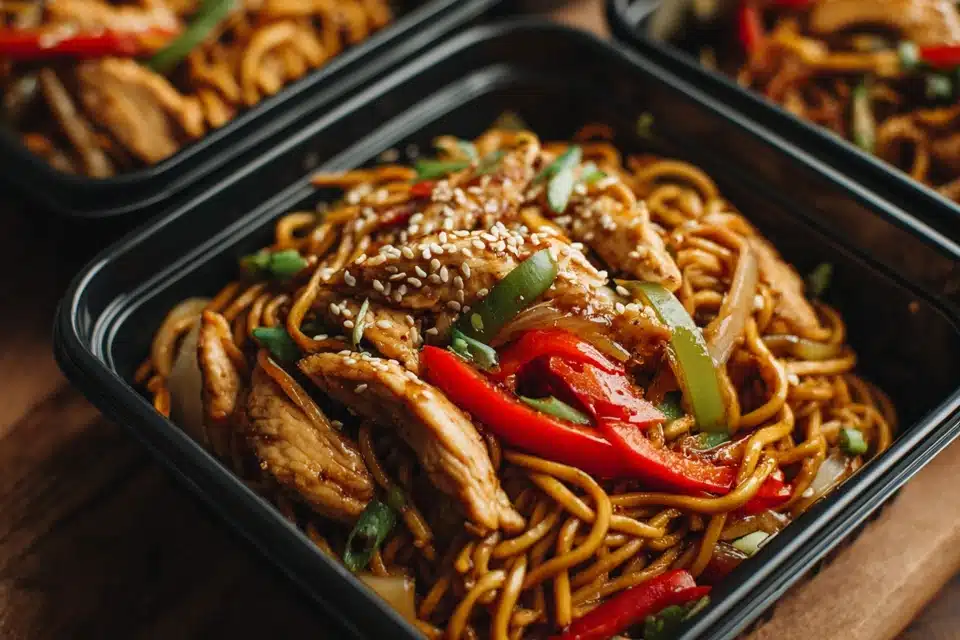
Healthy Chicken Chow Mein Noodles for Simple Meal Prep
A high-protein, macro-balanced chicken chow mein perfect for weekly meal prep. Packed with lean chicken, high-fiber noodles, and crisp vegetables in a savory soy-garlic sauce.
- Prep Time: 15 minutes
- Cook Time: 15 minutes
- Total Time: 30 minutes
- Yield: 4 servings 1x
Ingredients
- 1 lb boneless skinless chicken breast, sliced
- 6 oz high-protein or whole wheat chow mein noodles
- 1 cup shredded cabbage
- 1/2 cup julienned carrots
- 1/2 red bell pepper, thinly sliced
- 1/2 green bell pepper, thinly sliced
- 1/2 cup bean sprouts (optional)
- 2 green onions, sliced
- 2 tbsp avocado oil
- 1 tsp sesame oil (plus more for noodles)
Sauce:
- 3 tbsp low-sodium soy sauce
- 1 tbsp oyster sauce
- 1 tsp sesame oil
- 1 tsp rice vinegar
- 1 tsp cornstarch
- 1 tsp fresh ginger, grated
- 1 garlic clove, minced
Instructions
- Cook noodles according to package, undercook by 1 minute. Rinse in cold water, toss in sesame oil, and set aside.
- Mix sauce ingredients in a small bowl.
- Heat 1 tbsp oil in a large skillet or wok. Sear chicken 2–3 minutes per side until cooked. Remove and set aside.
- Add remaining oil. Stir-fry carrots, cabbage, and peppers for 3–4 minutes. Add bean sprouts and green onions.
- Return chicken and noodles to the pan. Pour sauce over top and toss everything for 2–3 minutes until coated.
- Taste and adjust seasoning. Let cool before storing.
Notes
- Use gluten-free noodles and tamari for gluten-free option.
- Add chili sauce for heat.
- Keeps well in fridge for 4 days.