
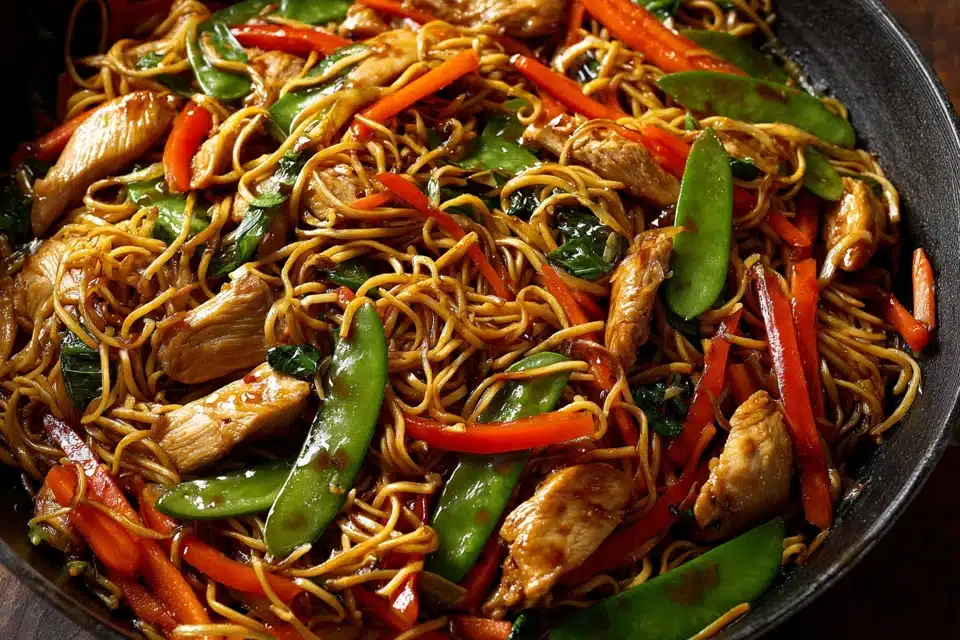
Easy Chicken Lo Mein – Takeout-Style Noodles at Home
Introduction
Chicken Lo Mein is a beloved Chinese-American classic that combines tender noodles, crisp vegetables, and savory stir-fried chicken in a deeply flavorful sauce. The dish is known for its balance of textures and bold umami-packed taste — all tossed together in just one pan.
This easy Chicken Lo Mein recipe captures all the essence of your favorite takeout, but it’s made with fresher ingredients and ready in about 30 minutes. With chewy noodles, juicy strips of chicken, and a garlicky soy-based sauce, it’s a satisfying meal perfect for busy weeknights or a casual dinner that feels just a little special.
Lo Mein translates to “tossed noodles” in Cantonese, and that’s exactly what this dish delivers — silky noodles tossed in a glossy, savory sauce that clings to every bite.
Ingredients Overview
The ingredients for Chicken Lo Mein are simple and easy to find, but each one plays a key role in flavor and texture:
- Chicken Breast or Thighs: Thinly sliced, marinated, and stir-fried until tender and golden. Breasts are lean, while thighs provide extra richness.
- Lo Mein Noodles: Traditional egg noodles work best, but spaghetti or linguine can be used in a pinch. Look for fresh lo mein noodles in the refrigerated section if available.
- Soy Sauce: Both light and dark soy sauce provide saltiness and color. Light soy sauce brings salinity, while dark soy adds a slightly sweet, rich undertone.
- Oyster Sauce: Adds depth, umami, and a hint of sweetness — an essential element for authentic flavor.
- Garlic & Ginger: Fragrant aromatics that infuse the oil and sauce with warmth and depth.
- Vegetables: A colorful medley of bell peppers, carrots, cabbage, and snow peas adds crunch and freshness.
- Sesame Oil: Adds a nutty, aromatic finish that defines classic lo mein.
- Cornstarch: Used to tenderize the chicken in the marinade and slightly thicken the sauce.
Ingredient Tips & Substitutions
- No oyster sauce? Use hoisin sauce or a blend of soy sauce with a bit of sugar.
- Low-sodium option: Use low-sodium soy sauce and skip any added salt.
- Gluten-free: Use tamari in place of soy sauce and rice noodles instead of egg noodles.
- Vegetarian: Skip the chicken and double the veggies or add tofu for protein.
- Spicy Version: Add chili garlic sauce or red pepper flakes to the sauce.
Step-by-Step Instructions
Here’s how to make easy Chicken Lo Mein from scratch with big flavor and little effort:
- Cook the Noodles
Bring a large pot of water to a boil. Cook noodles according to package instructions until just al dente. Drain and rinse under cold water to stop cooking. Toss with a drizzle of sesame oil to prevent sticking. - Prepare the Chicken Marinade
Thinly slice the chicken against the grain. In a bowl, mix chicken with 1 tsp soy sauce, 1 tsp cornstarch, and 1 tsp sesame oil. Let sit while prepping vegetables. - Stir-Fry the Chicken
Heat 1 tbsp of oil in a large wok or skillet over medium-high heat. Add chicken in a single layer and cook for 3–4 minutes until golden and cooked through. Remove and set aside. - Stir-Fry the Vegetables
Add another 1 tbsp oil to the pan. Stir-fry sliced carrots, bell peppers, and cabbage for 2–3 minutes until slightly softened but still crisp. Add garlic and ginger and stir for 30 seconds. - Add Sauce & Noodles
Return the chicken to the pan. Add cooked noodles and pour the sauce (soy sauce, dark soy sauce, oyster sauce, sesame oil) over the top. Toss everything together for 2–3 minutes until evenly coated and heated through. - Finish & Serve
Serve hot, garnished with chopped green onions or toasted sesame seeds if desired.
Tips, Variations & Substitutions
- Velveting Chicken: The cornstarch and oil marinade helps keep chicken tender during stir-frying.
- Wok Technique: Use high heat and a wide pan for the best stir-fry texture.
- Make it a Meal: Add a scrambled egg or leftover roast chicken for extra protein.
- Use Pre-Cut Stir-Fry Mix: For an even faster version, grab a bag of pre-chopped stir-fry veggies.
Regional & Cultural Twists
- Shanghai-Style: Use thicker noodles and a sweeter soy-based sauce.
- Szechuan Lo Mein: Add chili oil or Sichuan peppercorns for a spicy kick.
- American Takeout Version: Features more sauce and slightly softer noodles for a comfort-food feel.
Serving Ideas & Occasions
Chicken Lo Mein is perfect for casual dinners and quick meals that don’t skimp on flavor.
- Serve With:
- Steamed dumplings
- Hot and sour soup
- Asian cucumber salad
- Scallion pancakes
- Perfect For:
- Weeknight dinners in 30 minutes
- Leftover lunch prep
- Family-style meals
- Friday night “fakeout” takeout
It’s delicious warm or cold, making it great for lunchboxes or make-ahead dinners.
Nutritional & Health Notes
Chicken Lo Mein can be a wholesome and balanced dish when made at home. You control the sodium, sugar, and fat, making it far lighter than takeout versions.
- Protein: Chicken adds lean protein to support muscle and energy.
- Carbs: Egg noodles provide quick fuel. Whole wheat spaghetti is a good substitute for added fiber.
- Veggies: Loaded with colorful vegetables for vitamins A, C, and antioxidants.
- Oil: Stir-frying uses less oil than deep-frying, and sesame oil provides heart-healthy fats.
Average nutrition (per serving):
- Calories: ~400–450
- Protein: 30g
- Carbs: 40–50g
- Fat: 15g
Adjust with leaner cuts of meat, more vegetables, or low-carb noodles as needed.
FAQs
Q1: Can I make Chicken Lo Mein ahead of time?
A1: Yes! It stores well in the fridge for up to 4 days. Reheat in a skillet with a splash of water or broth to revive the sauce.
Q2: What’s the difference between Lo Mein and Chow Mein?
A2: Lo Mein means “tossed noodles” and is usually softer, saucier, and made with boiled noodles. Chow Mein involves crispier noodles often stir-fried until lightly crunchy.
Q3: Can I freeze Chicken Lo Mein?
A3: It’s best fresh, but you can freeze it in portions. The noodles may soften upon reheating, but the flavor will still be good.
Q4: Which noodles should I use for authentic Lo Mein?
A4: Chinese egg noodles or fresh lo mein noodles are ideal. If unavailable, spaghetti or linguine are good substitutes in texture.
Q5: Can I use leftover cooked chicken?
A5: Yes, just skip the marinade and add the chicken during the final stir-fry to warm through. It’s a great way to repurpose rotisserie or grilled chicken.
Q6: How can I make it more saucy?
A6: Double the sauce recipe if you prefer a looser, more takeout-style dish. Add a splash of water or broth to thin it slightly.
Q7: Is Chicken Lo Mein spicy?
A7: Not by default. It’s a mild dish, but you can add heat with chili oil, red pepper flakes, or a spoonful of sambal oelek.
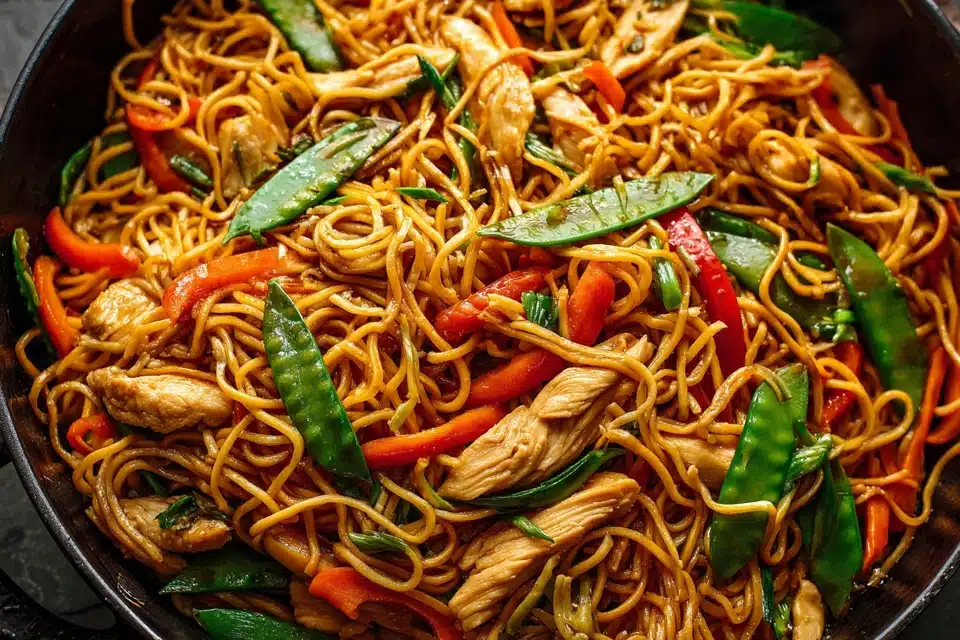
Chicken Lo Mein Recipe Quick, Saucy & Better Than Takeout
Tender noodles, juicy chicken, and crisp vegetables tossed in a garlicky soy-based sauce — this easy Chicken Lo Mein brings takeout flavor to your home kitchen in just 30 minutes.
- Prep Time: 15 minutes
- Cook Time: 15 minutes
- Total Time: 30 minutes
- Yield: 4 servings 1x
Ingredients
- 8 oz lo mein noodles (or spaghetti)
- 1 lb chicken breast or thighs, thinly sliced
- 1 tsp soy sauce
- 1 tsp cornstarch
- 1 tsp sesame oil (for marinade)
- 2 tbsp vegetable oil, divided
- 2 garlic cloves, minced
- 1 tsp fresh ginger, grated
- 1 cup shredded cabbage
- 1/2 cup julienned carrots
- 1/2 bell pepper, sliced
- 1/2 cup snow peas (optional)
- 2 tbsp soy sauce
- 1 tbsp dark soy sauce
- 1 tbsp oyster sauce
- 1 tsp sesame oil (for sauce)
- Green onions or sesame seeds (optional garnish)
Instructions
- Cook noodles according to package directions. Drain, rinse, and toss with sesame oil.
- In a bowl, combine sliced chicken with soy sauce, cornstarch, and sesame oil. Let marinate 10 minutes.
- Heat 1 tbsp oil in a wok or skillet. Stir-fry chicken 3–4 minutes until golden. Remove and set aside.
- Add remaining oil. Stir-fry vegetables for 2–3 minutes until just tender.
- Add garlic and ginger. Stir for 30 seconds.
- Return chicken and noodles to the pan. Add soy sauces, oyster sauce, and sesame oil. Toss well.
- Cook 2–3 more minutes until heated through. Serve hot.
Notes
- Use tamari for gluten-free version.
- Add chili sauce for heat.
- Double sauce for a saucier noodle dish.