
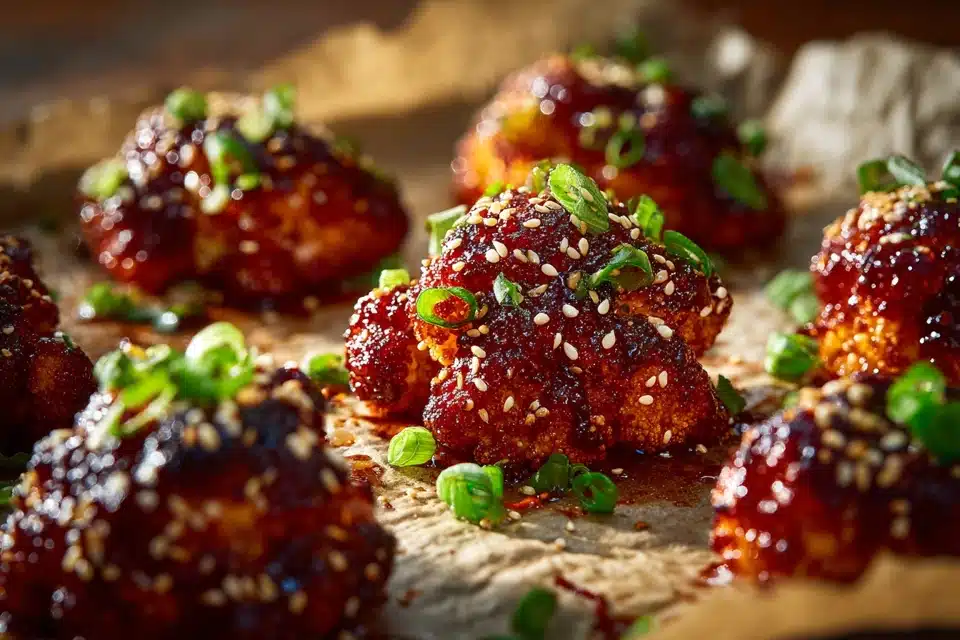
Korean-Style Baked Cauliflower – Crispy, Spicy & Irresistible
Introduction
If you’re craving bold flavors, crispy textures, and a healthier twist on comfort food, this Korean-Style Baked Cauliflower will blow you away. It’s the perfect plant-based alternative to Korean fried chicken — crisp-edged cauliflower florets coated in a sticky, spicy-sweet gochujang glaze that’s both fiery and deeply savory.
Baked instead of fried, this recipe brings you all the flavor with less oil. The cauliflower is roasted until golden and tender inside, then tossed in a bold Korean-inspired sauce that clings to every bite. It’s addictively good — perfect as a party appetizer, meatless main, or satisfying side dish.
Ingredients Overview
This recipe uses simple pantry items and Korean staples to achieve maximum flavor. Here’s what you’ll need:
-
Cauliflower: A whole head cut into bite-sized florets. It’s the perfect vehicle for soaking up the glaze.
-
Flour & cornstarch: These create the base for the batter. Flour gives structure, while cornstarch adds that signature crispy finish.
-
Plant milk or water: Used to create a light batter that sticks well without being too thick.
-
Gochujang: The essential Korean chili paste. It’s spicy, tangy, and just slightly sweet — a must-have for the sauce.
-
Soy sauce: Adds depth and saltiness to balance the heat.
-
Garlic & ginger: Fresh is best, but powdered versions work in a pinch. They build aromatic complexity in the glaze.
-
Rice vinegar: Adds brightness and a subtle tang.
-
Maple syrup or honey: Brings sweetness and helps the sauce caramelize slightly in the oven.
-
Sesame oil: A little goes a long way — adds toasty, nutty depth.
-
Sesame seeds & green onions: Optional but ideal for garnish and extra texture.
Ingredient Tips:
-
Use gluten-free flour for a GF version.
-
Gochujang varies in spice level — taste first and adjust.
-
Maple syrup can be replaced with agave or brown sugar.
Step-by-Step Instructions
-
Preheat and prepare the baking sheet
Preheat oven to 425°F (220°C). Line a large baking sheet with parchment paper or a silicone mat for easy cleanup and even crisping. -
Make the batter
In a large bowl, whisk together:-
¾ cup all-purpose flour
-
¼ cup cornstarch
-
¾ cup unsweetened plant milk (or water)
-
Pinch of salt
The batter should be smooth and slightly thick — like pancake batter.
-
-
Coat the cauliflower
Add cauliflower florets (from 1 medium head) to the batter. Toss well to coat each piece. Shake off excess batter and arrange the florets in a single layer on the baking sheet. -
Bake until golden
Roast for 25–30 minutes, flipping halfway, until the cauliflower is crisp and lightly browned. -
Make the Korean glaze
While cauliflower bakes, whisk together in a saucepan:-
2 tbsp gochujang
-
2 tbsp soy sauce
-
1 tbsp rice vinegar
-
2 tbsp maple syrup or honey
-
1 tsp sesame oil
-
1 clove garlic, minced
-
1 tsp grated ginger
Bring to a simmer over low heat and cook for 2–3 minutes until slightly thickened.
-
-
Toss in sauce
Transfer the baked cauliflower to a large bowl. Pour the warm glaze over and toss gently to coat. -
Optional: Bake again for extra stickiness
Return coated cauliflower to the baking sheet and bake for another 5–7 minutes to set the glaze and enhance caramelization. -
Garnish and serve
Sprinkle with sesame seeds and sliced green onions. Serve immediately.
Chef Tips:
-
Use a cooling rack on your baking sheet for maximum crispness underneath.
-
Double the sauce if serving with rice or noodles — it’s that good.
-
Add chili flakes for extra heat, or reduce gochujang if you prefer milder spice.
Tips, Variations & Substitutions
Pro Tips
-
Don’t overcrowd the baking sheet — spacing ensures crisp edges.
-
Let the glaze cool slightly before tossing to help it thicken and cling better.
-
Use tongs or a slotted spoon to transfer battered cauliflower to the tray to avoid pooling batter.
Flavor Variations
-
Sweet & Spicy: Add pineapple juice or orange zest to the glaze.
-
Sticky Soy Garlic: Skip the gochujang and increase garlic, soy sauce, and maple for a milder version.
-
Extra Crunch: Toss battered florets in panko breadcrumbs before baking.
Substitutions
-
No gochujang? Use sriracha mixed with a little tomato paste.
-
Gluten-free? Use rice flour or chickpea flour and tamari instead of soy sauce.
-
Vegan? Use maple syrup or agave instead of honey.
Serving Ideas & Occasions
These spicy, sticky cauliflower bites are as versatile as they are craveable.
Serve With:
-
Steamed jasmine rice or sticky rice
-
Kimchi or Korean cucumber salad
-
A light slaw with sesame dressing
-
Noodles or lettuce wraps
Perfect For:
-
Weeknight dinners
-
Game day appetizers
-
Meatless Monday
-
Party platters or potlucks
-
Korean BBQ-inspired meals
Their bold flavor and texture make them a hit with plant-based and omnivorous eaters alike.
Nutritional & Health Notes
Cauliflower is naturally low in calories and high in fiber and vitamin C, making it a great base for a flavorful dish like this.
-
Baking instead of frying significantly reduces added fat and keeps things lighter.
-
Gochujang contains fermented ingredients that may aid digestion.
-
Maple syrup offers a more natural alternative to refined sugar.
Make it lighter:
-
Use water instead of plant milk in the batter.
-
Serve with extra vegetables or lettuce wraps.
-
Skip the second bake if you’re short on time — still delicious.
Each serving (about 1 cup) is approximately 180–220 calories depending on sauce quantity — much lighter than traditional fried versions.
FAQs
Q1: Can I make this in an air fryer?
Yes! Air fry at 400°F for 15–18 minutes, shaking halfway through. Add the sauce afterward and optionally return to the air fryer for 3 minutes.
Q2: Can I make this ahead of time?
It’s best fresh, but you can bake the cauliflower ahead and reheat in the oven before saucing. Add sauce just before serving.
Q3: How spicy is it?
Moderate heat. Gochujang has a warm, fermented heat — not too sharp. Adjust by using less or mixing with ketchup or hoisin.
Q4: Is gochujang gluten-free?
Traditional gochujang contains wheat, but gluten-free versions are available. Always check the label.
Q5: Can I use frozen cauliflower?
Fresh is best for texture, but you can use frozen if fully thawed and patted dry before battering.
Q6: Can I double the recipe?
Yes — just bake in batches to avoid overcrowding and ensure crispness.
Q7: What if I don’t have sesame oil?
Skip it or substitute with a neutral oil — sesame oil adds depth but isn’t essential.
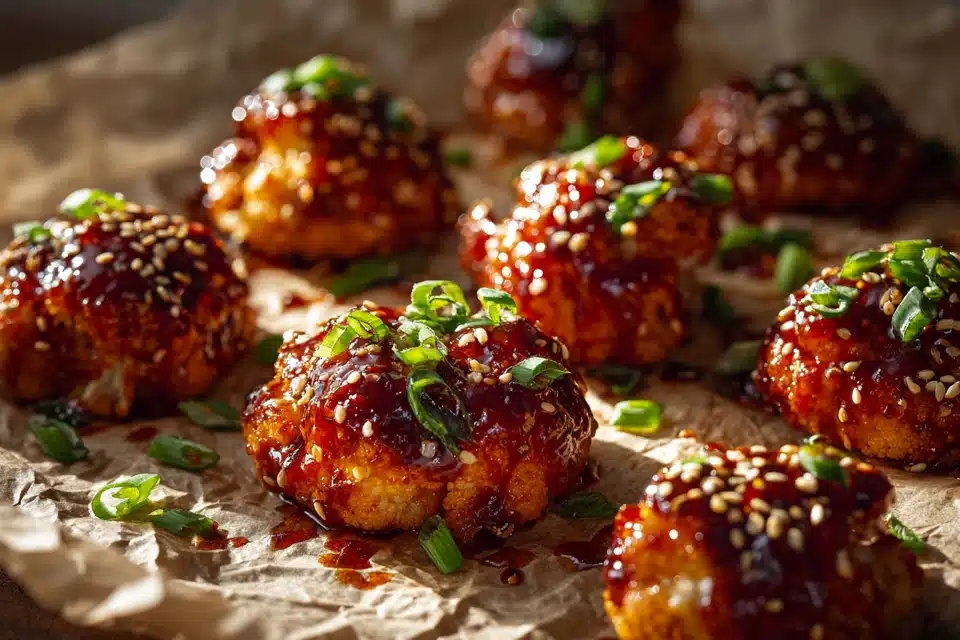
Korean Baked Cauliflower – Crispy, Spicy & Totally Addictive

Crispy baked cauliflower bites tossed in a spicy-sweet Korean gochujang glaze — a bold, plant-based twist on Korean comfort food.
- Prep Time: 15 minutes
- Cook Time: 30 minutes
- Total Time: 45 minutes
- Yield: 4 servings 1x
Ingredients
-
1 medium head cauliflower, cut into florets
-
¾ cup all-purpose flour
-
¼ cup cornstarch
-
¾ cup plant milk or water
-
Pinch of salt
-
Cooking spray or oil
Glaze:
-
2 tbsp gochujang
-
2 tbsp soy sauce
-
1 tbsp rice vinegar
-
2 tbsp maple syrup or honey
-
1 tsp sesame oil
-
1 clove garlic, minced
-
1 tsp fresh ginger, grated
Garnish:
-
Sesame seeds
-
Sliced green onions
Instructions
-
Preheat oven to 425°F. Line a baking sheet with parchment.
-
Whisk flour, cornstarch, milk, and salt into a smooth batter.
-
Coat cauliflower in batter, shake off excess, and spread on tray.
-
Bake 25–30 minutes, flipping halfway.
-
While baking, simmer sauce ingredients in a small pan until thickened.
-
Toss baked cauliflower in glaze. Return to oven for 5–7 minutes (optional).
-
Garnish and serve immediately.
Notes
-
Use gluten-free flour and tamari for a GF version.
-
Adjust spice by reducing or increasing gochujang.
-
Best served fresh for crisp texture.